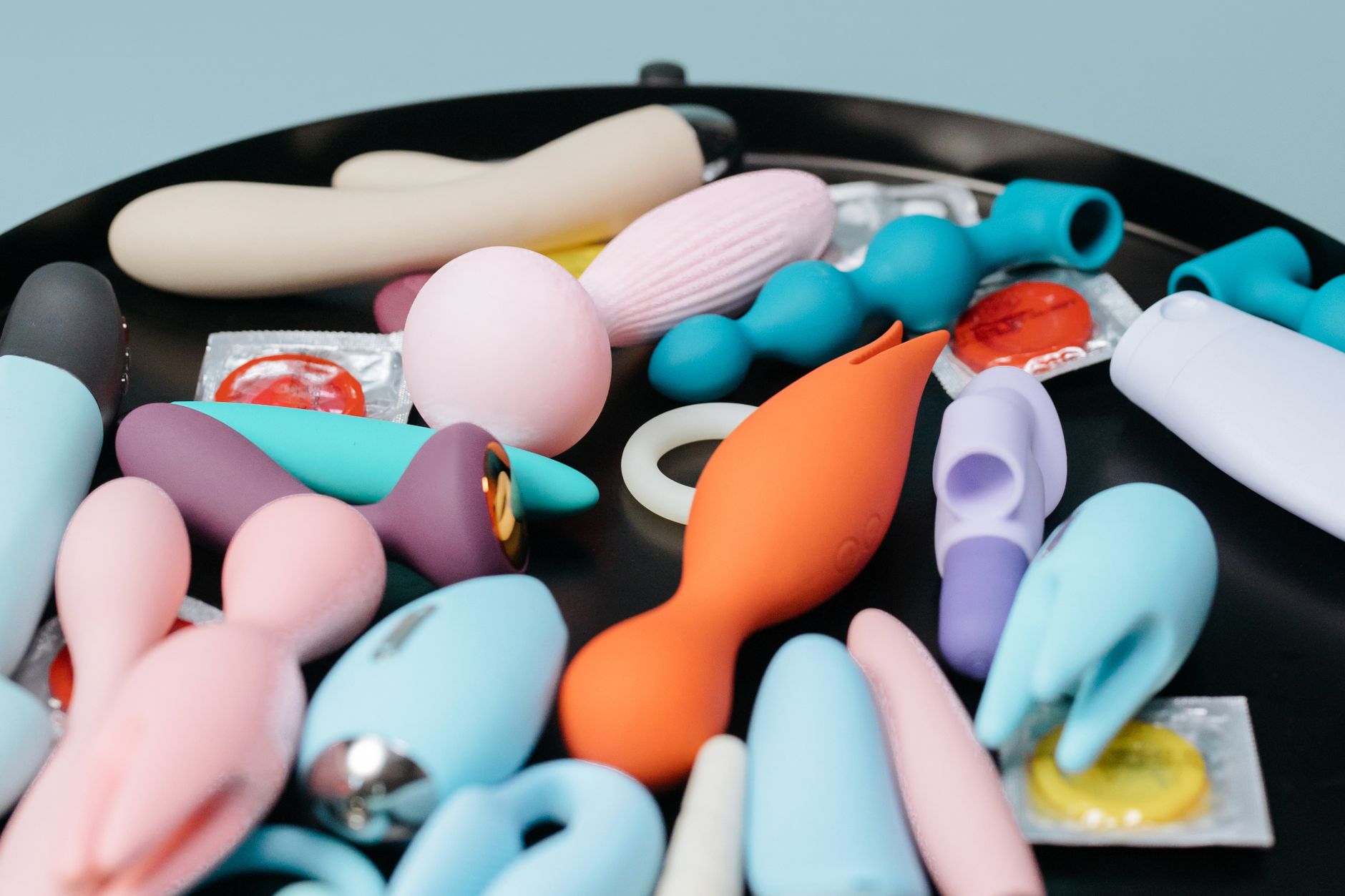
Here's what actually happens when you stop the pill
You came off hormonal birth control, and suddenly your body feels like a stranger. Libido might spike, crash, or do something weirder altogether. Your skin texture changed. Your cycle is unpredictable. And if you were trying to figure out your pleasure, well, the rulebook just shifted.
This is real, and it's worth understanding before you pick up a toy.
The hormonal reset your body goes through
Hormonal birth control suppresses your natural estrogen and progesterone rhythm. When you stop, your body has to relearn how to produce these hormones on its own. That doesn't happen overnight. It takes weeks to months for your cycle to stabilize.
During that reset, your clitoral sensitivity shifts. Tissue thickness changes. Lubrication patterns become unpredictable. Some people report hypersensitivity for the first month or two. Others find everything feels muted until their cycle regularizes.
The kicker? This is also when libido often returns. Your testosterone, which was being dampened by hormonal contraception, ramps back up. You might feel desire more intensely than you have in years. But your body's ability to respond might not match that desire. That's not broken. That's a transition.
Why a lemon clitoral vibrator works during this phase
Unlike traditional vibrators that rely on intense vibration, a lem vibrator uses gentle suction to stimulate the clitoris. This matters when you're hormonally transitioning because your tissue sensitivity is unpredictable.
With suction, you control the intensity through air-pulse patterns rather than raw vibration. You can start on a low pattern and work up gradually. Your body gets to recalibrate at its own pace, which is exactly what you need when hormones are still finding their baseline.
A clitoral suction vibrator also doesn't require as much direct friction as traditional toys. If your sensitivity is heightened post-pill, that matters. If it's dampened, the broader stimulation of suction can feel more effective than a vibrating bullet.
The first week: go low and slow
Your body just came off a medication that was fundamentally controlling your hormones. Treat this phase like you're rediscovering pleasure from scratch.
Start with the lem on pattern one. Not pattern three. Not halfway. Pattern one. Set aside 20 minutes without rushing. Your nervous system is still adjusting, and arousal might take longer than it did on the pill or longer than you expect it to now that libido is returning.
Focus on sensation, not outcome. What does the suction feel like now? Is there a spot that feels better than another? Does your sensitivity change from day one to day three? You're gathering information, not trying to achieve anything.
If pattern one feels too intense, try just holding the lem against your skin without turning it on. Let your body adjust to the device itself before adding stimulation.
Weeks two through four: pattern progression
Once you've spent a few sessions with pattern one, you're ready to experiment upward. Many people find that patterns two and three feel more pleasurable after the initial adjustment period.
Here's what's useful to track during this month. How does sensation feel different at different points in your cycle? If you've got a menstrual cycle, you might notice that sensitivity shifts as progesterone and estrogen fluctuate. That's completely normal and actually a sign that your body's hormones are regulating.
Your arousal timeline might still be longer than it was before you started hormonal birth control. That doesn't mean something's wrong. It means your body's building arousal from your brain down, rather than from hormonal saturation. It can actually feel more connected and intentional.
If you have a partner, this is a good time to mention that you're recalibrating. Pleasure might look different for a few months. That's not about them. It's about your body finding its natural rhythm again.
The sensitivity wild card
Some people report hypersensitivity in the first six to eight weeks after stopping hormonal birth control. Your clitoris might feel almost too sensitive for direct contact. If that's you, the lem is genuinely your friend because you control the pressure and pattern without having to worry about the intensity of vibration.
If you're experiencing heightened sensitivity, skip patterns three and four for now. Rotate through patterns one and two. You might find that you need less time with the device to reach orgasm, which is great. It's also temporary. As your hormones stabilize, sensitivity will normalize.
Other people experience the opposite. Everything feels muted for the first month. Orgasm takes longer or doesn't happen at all. This is also temporary. Your body is still recalibrating cortisol, dopamine, and the full cascade of neurotransmitters that hormonal birth control was influencing. Patience here matters more than pressure.
The role of lubrication in your post-pill transition
Your vaginal lubrication patterns change when you stop hormonal birth control. Some people become incredibly wet immediately. Others find that natural lubrication takes time to return to baseline. Both are normal.
Regardless of where you fall, use a water-based lubricant with your lem. It's not because you're broken. It's because you're in transition. Lube reduces friction, which means you can focus on the sensations that actually feel good rather than managing discomfort.
Apply lube to the opening of the lem and to your vulva. Reapply as needed. If you're in the hypersensitivity phase, lube also helps buffer intensity and can make everything feel more comfortable.
Reconnecting pleasure to your actual arousal
Hormonal birth control flattens the arousal arc for many people. You weren't cycling through peaks and valleys of desire and sensitivity. You were on a consistent hormonal plane for years. Coming off it means rediscovering what genuine arousal feels like in your body.
This is actually an opportunity. Pay attention to what turns you on now. Is it the same content, the same situations, the same partner dynamics? Or has your desire shifted? Some people find that their fantasies change or that they have stronger fantasies than they remember having before birth control.
Use your lem as a tool for that exploration, not as a shortcut around it. The best orgasms during this transition aren't necessarily the fastest ones. They're the ones where you actually felt something.
Dealing with the emotional side of the shift
Your mood, anxiety, and emotional baseline are shifting too. Hormonal birth control affects serotonin regulation. Coming off it can mean anxiety spikes, mood swings, or unexpected emotional release during or around sex.
If you're feeling anxious about your body's changes, that's completely valid. Your libido returned, but your body doesn't feel the same. That's disorienting. Some people benefit from talking with a partner, a therapist, or both about what's happening. Your body isn't broken. It's waking up.
If racing thoughts or anxiety show up during pleasure, check out our guide on how to use a lemon vibrator when you have anxiety or racing thoughts. Many of those strategies apply directly to this transition too.
Month two and beyond: integrating your new baseline
By week six or eight, your cycle has usually stabilized enough that you can see patterns. You know whether your sensitivity peaks mid-cycle or right before your period. You've figured out which patterns on the lem actually feel good versus which ones you thought should feel good.
At this point, you're not relearning pleasure from scratch anymore. You're settling into a new normal. Your natural hormones are driving desire and sensation again. That can feel richer than it ever did on hormonal birth control, or it might take some recalibration if you spent years on the pill.
If you have a partner, you might notice that you want to reconnect physically in ways you didn't before. That's your body's chemistry talking. It's also an opportunity to rebuild intimacy after a period where your hormones were externally managed.
Many people find that they want to explore reconnecting with their partner after significant time apart, even if that time was just the years they spent on hormonal birth control. Your body and your desire are genuinely different now.
When to seek support
If you're two months off hormonal birth control and you're still experiencing intense anxiety, depressive symptoms, or no return of libido, talk with your doctor. Sometimes the adjustment takes longer. Sometimes you need additional support. That's not failure. That's just good self-care.
If pleasure is painful during this transition, that also warrants a conversation with your gynecologist. Pain isn't a normal part of the post-pill adjustment, and it's worth ruling out any underlying issues.
Otherwise, be patient with yourself. Your body did something incredible during the years you were on birth control. It adapted. Now it's adapting again. A clitoral vibrator like the lem is just a tool to help you explore what that new baseline actually feels like.
People also ask
How long does it take for sensitivity to return to normal after stopping hormonal birth control?
Most people experience significant hormonal stabilization within six to eight weeks. That said, your full cycle rhythm might take three to six months to become truly predictable. Sensitivity usually tracks with hormonal stabilization, so expect noticeable shifts in the first two months and gradual normalization after that. Everyone's timeline is different, though. Some people report feeling "normal" after three weeks. Others take a full four months. Your body's not late. It's just on its own schedule.
Can I use a lemon vibrator immediately after stopping birth control?
Absolutely. Stopping birth control doesn't mean you need to wait to explore pleasure. What changes is how you approach it. Go slower than you might normally. Use lower intensity patterns. Pay attention to what actually feels good rather than what you think should feel good. Your body is recalibrating, and a clitoral vibrator like the lem can be a really useful tool for that exploration.
Why does my libido feel different after quitting hormonal birth control?
Hormonal birth control suppresses your natural testosterone and cyclical estrogen fluctuations. When you stop, testosterone returns, which typically increases desire. But your body's baseline arousal capacity is also different because you're no longer on external hormones. Some people report that desire is higher but takes longer to build. Others find the opposite. That's your unique body chemistry expressing itself again after years of being chemically managed.
Is it normal for orgasms to feel different after stopping hormonal birth control?
Completely normal. The neural pathways for arousal and orgasm shift when your hormonal environment changes. Some people report more intense orgasms after stopping birth control. Others find they take longer to achieve. Most find that orgasms feel qualitatively different in a way that's hard to describe but very real. Give yourself a few cycles to adjust before assuming anything is wrong.
Should I use more or less lube with a lemon vibrator after stopping birth control?
Likely more, at least for the first month. Hormonal birth control affects lubrication patterns, and it takes time for your natural lubrication to return to pre-pill baseline. Using water-based lube with your lem reduces friction and makes every sensation feel clearer. It's also protective of your tissue, which is especially useful when sensitivity is unpredictable. Reapply as needed. Lube isn't cheating. It's supporting your body's transition.
Can stopping birth control affect pleasure with a partner differently than solo pleasure?
Yes. Hormonal shifts affect desire, arousal capacity, and how you respond to touch. When you're with a partner, you're also navigating emotional intimacy, which can amplify or buffer those physical changes. Some people find that partnered sex feels more connected after stopping birth control. Others need more time alone to recalibrate before partnered exploration feels right. There's no universal timeline. What matters is communicating with your partner about what's shifting and being patient with yourself.