Let's start with the honest part
Introducing a toy to a new relationship feels risky. You're still learning each other's bodies, still building trust, and the last thing you want is for your partner to think you're bored or unhappy. But here's what I see in my practice over and over: the couples who bring toys into their early relationship intentionally, with clear communication, actually build stronger sexual connection faster. Not because the toy is magic, but because it forces you to talk about pleasure before resentment sets in.
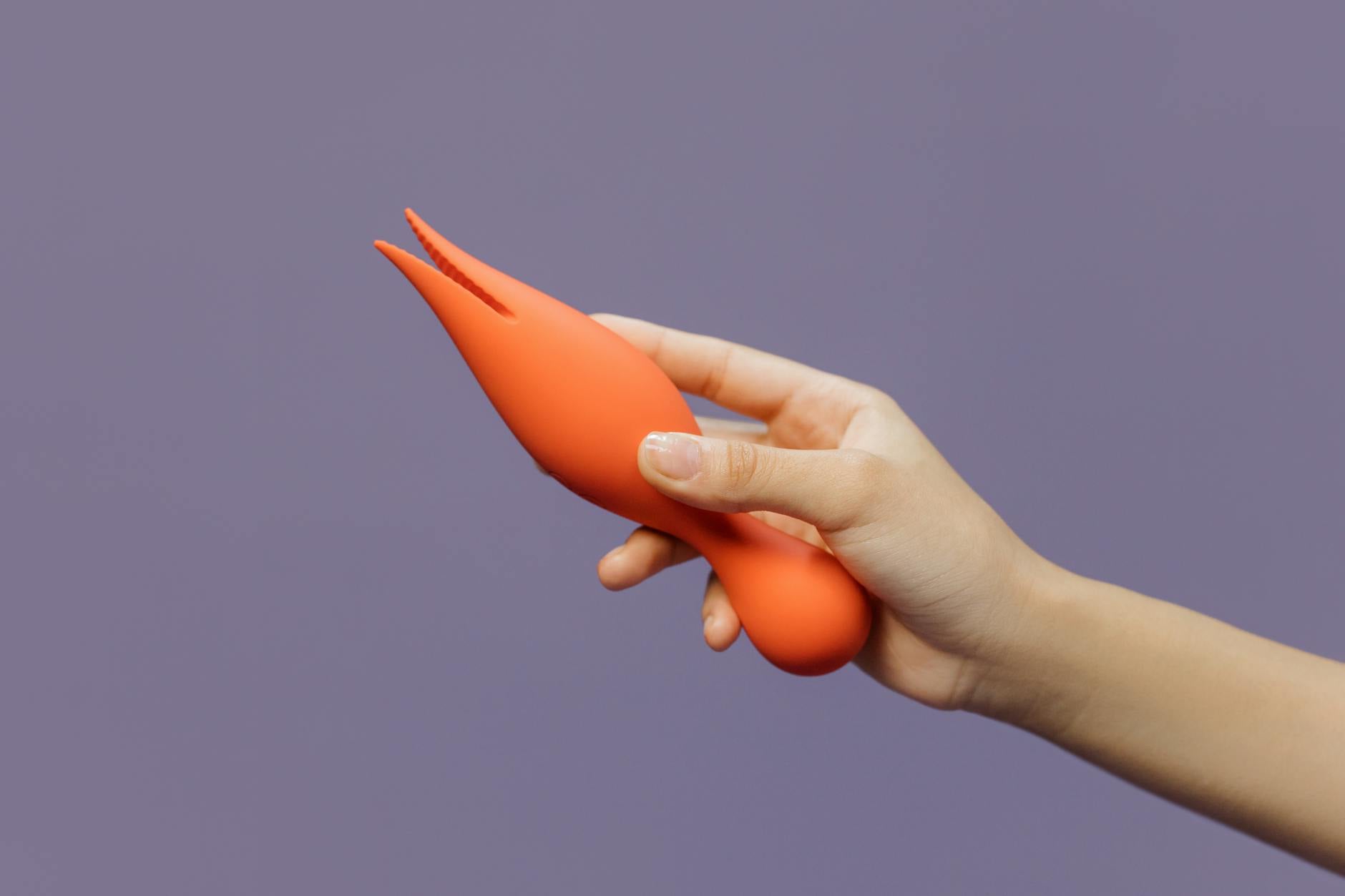
A lemon vibrator, specifically, is one of the smartest entry points for this conversation. It's not intimidating. It's beautiful to look at. And because it works through suction rather than vibration alone, it feels collaborative in a way that some other toys don't. Your partner isn't competing with the toy. They're participating in your pleasure.
Here's how to make it work.
The conversation happens before the bedroom
This is non-negotiable. If you spring a toy on someone mid-intimacy, you've just turned pleasure into a surprise task, and that's not the vibe. The best time to mention it is during a regular conversation. Not a "we need to talk" moment. Just casual.
A working script: "I've been thinking about exploring pleasure more intentionally in our relationship. I found this clitoral vibrator called a lemon vibrator that's supposed to feel really different from what I've experienced. I'd love to try it together at some point. What would you think about that?"
Notice what's in that script. You're naming the specific toy (takes away the mystery and potential shame). You're framing it as exploration, not correction. You're making it something you do together, not something done to you. And you're asking an actual question, not announcing a decision.
Most partners will say yes to this. Some will need time to think about it. A small number will feel threatened, and that's real information. If someone's answer is "no, I'm not comfortable with that," you've just learned something important about compatibility before it becomes resentment. That's actually valuable.
What to buy before you have the conversation
Don't talk about trying a toy and then ask your partner to go shopping with you. That's putting the burden on them to know what a lemon sucker is or feel comfortable in a sex shop. You've already done the research. You know what a lemon vibrator is. You've decided it appeals to you. Owning that makes the whole thing feel less performative.
Order it online. Let it arrive. Then mention it in conversation. When the moment comes, you're not scrambling to order something or feeling self-conscious in a shop. You're ready.
If you're ordering together because your partner wants to be part of that choice, great. But give them the option to opt out of that step. Some people find the research and selection process intimate and bonding. Others find it awkward. Both are fine.
The first time matters, but not in the way you think
Don't build it up as a huge event. This isn't your wedding night again. It's an experiment. You might love it immediately. You might feel self-conscious. You might discover that your body responds differently than you expected.
All of that is normal and fine. Set the tone by making it low-stakes. "Let's just try this tonight and see what happens." Not "I want this to be amazing for us." The second version puts pressure on both of you to perform.
Before you even touch the toy, your partner should watch you use it alone first. This sounds strange, but it's one of the most reassuring things you can do. It shows them that you're not anxious, that you're not asking them to do something to you that you haven't already explored yourself, and that pleasure isn't a mystery. You're just using a tool that feels good.
That first solo moment also lets you practice. You'll learn the intensity levels. You'll figure out the angle that works for your body. You'll discover whether you need lubrication or how long the battery lasts. Do all that research on your own time so you're not both fumbling in the dark.
When you're actually together
Start with clothes on. Sounds weird, but it takes the pressure off. You're kissing, you're touching through fabric, and then you introduce the toy when things are already warm. Not as a cold opening move.
Your partner doesn't have to use it. They might want to hold it and control the pattern. They might want to watch. They might want to use it on you while they do something else. The toy is a tool for your pleasure, not a job for them. If they're engaged in your experience, that's what matters.
Communication in the moment is easy if you've already practiced talking about pleasure outside the bedroom. "That feels good" or "Try a different pattern" or "Slower, please" aren't awkward when you've already had the vulnerable conversation about wanting to explore.
One practical note: a lemon clitoral vibrator works best with a water-based lubricant. Not because anything is wrong with your body, but because the suction action gets better with a tiny bit of moisture. Bring the lubricant to bed. Make it part of the setup. Your partner can apply it. It's collaborative and takes pressure off you to perform arousal on schedule.
What happens if he's nervous
Some partners, especially men, worry that introducing a toy means you're not satisfied with them. This is insecurity masquerading as logic. You can't think your way out of that feeling for someone else, but you can provide information.
"This isn't about you not being enough. It's about my body and what I'm learning about my own pleasure. You matter enormously in this. I want to experience this with you." That's not a line. That's just true. A toy does one thing. A partner does everything else. Those aren't in competition.
If your partner remains uncomfortable, you have a choice to make. You can honor their boundary and explore alone, or you can recognize that a fundamental incompatibility is showing itself early. Both are valid moves. But making the choice consciously, together, is better than letting resentment build.
The confidence piece
Here's what I've noticed: women who use toys before introducing them to a partner are wildly more confident in the moment. They're not discovering their body for the first time during a shared experience. They're not hoping the toy will "work." They already know what pleasure feels like, and they're inviting someone to participate in something they understand.
That confidence is magnetic. It makes the partner feel secure. It makes the whole thing feel intentional rather than desperate.
So yes, use the lemon vibrator alone first. Not because you need to hide it, but because knowing your own pleasure is the foundation for sharing it.
When the conversation takes an unexpected turn
Sometimes introducing a toy opens a door to bigger conversations about desire, about what's been missing, about fantasy or pace or frequency. Don't avoid those conversations. They're gold. You're four weeks into a relationship and already building the foundation for honest communication about sex. That's ahead of the curve.
If you're reconnecting with a partner after years apart, a toy can also be a way to reset expectations and rebuild intimacy from a place of curiosity rather than habit. New partners get that clarity automatically. Use it.
FAQ
Should I hide the lemon vibrator from my new partner?
No. Hiding it implies shame, and that sets the tone for everything that comes next. Keep it in a regular place. Let them know it exists. Demystifying it is half the battle.
What if my partner asks to use it on me right away without me trying it first?
You can absolutely say no. "I want to understand it first, and then we can explore it together." That's a boundary, and it's healthy. There's no rush. You have time.
Is using a lemon clitoral vibrator in a new relationship weird?
No. It's intentional, which is actually the opposite of weird. You're both showing up to the conversation with honesty and curiosity. That's the foundation of good sex.
How do I know if my partner is secretly uncomfortable but pretending to be fine?
Pay attention to their body language, not just their words. Are they present and engaged, or are they checking out emotionally? Do they ask questions afterward, or do they avoid the topic? Most importantly, ask directly. "You seem quiet. What are you thinking?" Sometimes people need permission to voice discomfort.
What if introducing a toy creates distance instead of closeness?
Then you've learned something important about your compatibility early, when you can still make a clear choice about whether to stay. Not every relationship is built on the same relationship to pleasure, and that's okay. But you deserve a partner who's curious about yours.
Can we use a lemon vibrator together if we're both new to toys?
Absolutely. The conversation and approach are exactly the same. The only difference is you're both learning. That shared vulnerability can actually be really bonding. Just give yourself grace to be awkward at first. Everyone is.
The bottom line
A new relationship is the best time to introduce a toy because you haven't yet built a sexual history that feels complete. You're still writing the story together. A lemon vibrator isn't an add-on to an existing dynamic. It's part of how you build the dynamic from the start. You're saying: we talk about pleasure, we're curious about it together, and we trust each other enough to experiment.
That's a foundation worth building on.