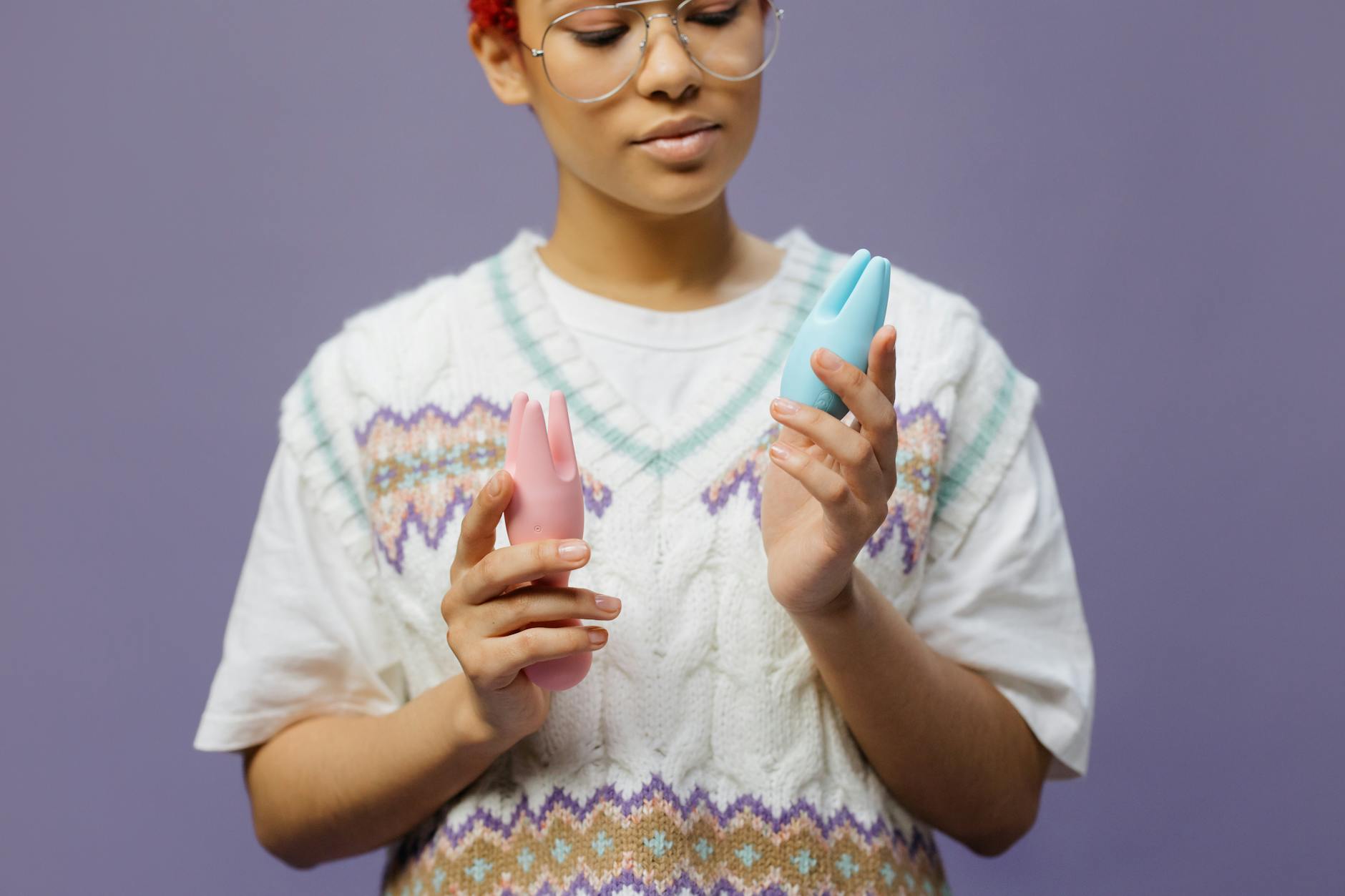
Let's talk about the real barrier
Here's what I hear most often in my practice: "My partner won't even talk about toys." Or "I want to try a vibrator together, but they think it means I'm not satisfied with them." The anxiety isn't really about the Lem vibrator itself. It's about what introducing one seems to imply.
When someone is nervous about intimacy, adding anything new can feel like criticism. A lemon clitoral vibrator, from their perspective, might read as "you're not enough" or "something's broken between us." That's the conversation that needs to happen first.
Why the nervousness shows up
Partner anxiety during sex often roots in one of three places. First, there's performance pressure. He or she feels responsible for your pleasure and orgasm. If you haven't been satisfied, that becomes their failure. A vibrator, then, feels like proof they failed.
Second is insecurity. Maybe they've experienced sexual rejection before, or they've internalized the myth that "real" sex shouldn't need tools. They're worried that wanting to use a Lem vibrator means the relationship is in trouble.
Third is simple unfamiliarity. They grew up without sex toys in their household. They don't have a reference for what toys do or why couples use them. It feels foreign, maybe unsafe, definitely strange.
None of these worries are wrong. They're just incomplete information disguised as feelings.
The conversation before the toy arrives
Don't introduce the vibrator itself first. Introduce the idea.
Pick a moment that's not sexual. Not in bed, not when you're both already aroused, not when you've just had sex. It's a regular Tuesday. You're doing dishes or having coffee. Low stakes.
Say something like: "I've been thinking about our sex life, and I want to be honest about something. I love being with you. And I'd like to explore something together that might feel good for both of us. I've heard about clitoral vibrators that some couples enjoy, and I'm curious if we could try it without any pressure. Just to see."
Then stop talking. Let them respond.
If they say no immediately, don't argue. Ask one question: "What worries you about it?" Listen to the actual answer. It won't be "vibrators are weird." It'll be "I feel like I'm not enough" or "I don't know what I'm doing" or "What if it's not natural."
Address that specific worry, not the toy. "You are enough. This isn't about you being better or worse. It's about exploring what feels good together." Or: "I want to do this with you specifically because I trust you."
If they say maybe or yes, that's when you move forward.
How to introduce the actual Lem vibrator
When you do bring a lemon vibrator into the bedroom, frame it as a shared experiment. Not something you're doing to yourself while your partner watches. Something you're discovering together.
Start clothed. Show them the vibrator. Let them hold it. Explain what it does without shame. "It's a clitoral vibrator. It stimulates in a way that feels different from fingers or penetration. Some people orgasm faster with it. Some people just find it feels nice."
Then ask: "Would you be interested in using this on me?" Or: "Would you want me to show you how it feels?"
The key shift here is that your partner becomes the operator, not the observer. That changes the psychology completely. They're not being replaced. They're learning something new about what brings you pleasure. That's collaborative, not competitive.
During the experience
Start slow. Use the lowest pattern. Many partners who are nervous about toys panic because the sensation feels aggressive or overwhelming. Starting at pattern 1 or 2 on the Lem vibrator keeps the intensity manageable and lets both of you adjust.
Keep talking. Not dirty talk if that's not your style. Just narration. "That feels good." "A little lower." "Softer." Your partner needs feedback that they're doing it right.
Don't expect an orgasm. This is about sensation and connection, not the endpoint. The pressure to come while someone's watching adds anxiety back in. If you orgasm, great. If you don't, that's also fine. The goal is discovering what you both enjoy.
Take breaks. Five minutes of vibration is enough for a first time. Put it down. Touch each other without the vibrator. Let your nervous system settle.
What happens when they feel more comfortable
As your partner relaxes, you can explore a little more. Maybe you use the lemon clitoral vibrator during foreplay instead of as the main event. Maybe you trade and they show you what it feels like on them. Maybe you use it sometimes and skip it other nights.
The point is that it becomes another tool in your intimacy toolkit, not a source of tension.
Some partners who start nervous end up loving toys. They stop feeling threatened because they see firsthand that the vibrator doesn't replace them. It's an addition. Their touch, their presence, their voice still matter.
Others stay less enthusiastic about vibrators but become fine with you using one solo. That's also a completely valid outcome.
If resistance stays strong
Sometimes you do all of this work and your partner still won't engage. They say no and stay no. At that point, you have a relationship decision to make, not a toy decision.
If your sexual needs are incompatible, that's real information. A partner who refuses to discuss your pleasure or explore together is telling you something about how they approach intimacy and collaboration.
You can use a lemon vibrator alone, of course. But if your partner refuses to discuss your needs at all, that's a couples therapy conversation, not a sex toy one. You might consider talking to a therapist together.
The long view
Introducing any new element into sex with a nervous partner requires patience. You're not just introducing a vibrator. You're teaching your partner that it's safe to talk about pleasure, that experimentation is okay, that vulnerability with you won't be used against them.
That foundation matters more than whether the Lem vibrator feels amazing on your first try. Build the trust first. The pleasure follows.