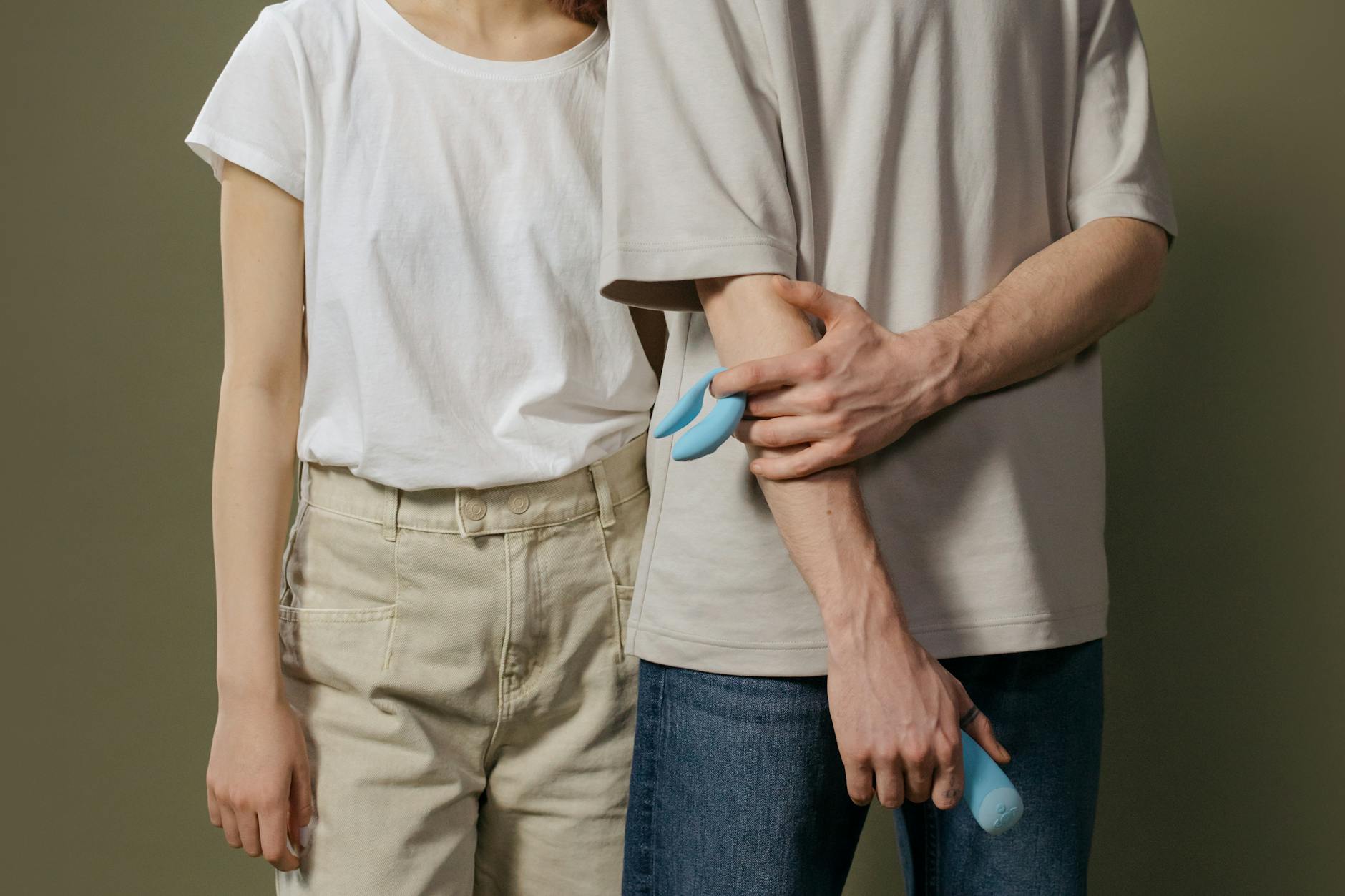
Let's be real about couples and vibrators
Most conversations about bringing a vibrator into partnered sex start with anxiety. Will it hurt my partner's feelings? Does it mean they're not enough? Will the moment feel clinical instead of intimate? These worries are so common I hear them in almost every couples session where toys come up.
Here's what I've learned after years of helping couples navigate this: the device matters. A lemon clitoral vibrator, in particular, is built differently than conventional vibrators, and that difference changes how partners experience pleasure together.
Why vibrator design shapes the couple dynamic
Most vibrators were engineered for solo use. That means they prioritize intensity and speed for the person holding them. The motor is loud. The stimulation is relentless. The partner often becomes a spectator watching someone else chase their own orgasm. That's not bad, exactly. It's just not collaborative.
A lemon sucker works differently. The air-suction technology doesn't vibrate in the traditional sense. It pulses in a pattern that feels more like gentle rhythmic pressure than buzzing. That means two things happen at once:
First, it pairs naturally with partner touch. A finger, a tongue, an inside touch from a partner, a slow grind together. The lemon vibrator isn't competing with other sensations. It's amplifying them. You're not choosing between the toy and your partner. You're using the toy to deepen what your partner is already doing.
Second, it removes the performance pressure. There's no countdown clock. You're not watching someone else trying to finish. You're both in the same moment, adjusting rhythm together, reading each other's breath and body. The toy is an instrument you're playing together, not a replacement.
How couples describe the experience differently
When I ask couples who've tried conventional vibrators how it felt, I hear: "It was intense, but she seemed far away." "I felt kind of pushed out of the moment." "It was exciting but weird to just watch."
When couples describe using a clitoral sucker like the Lem? It's almost always: "I could still be part of it." "We found a rhythm together." "It made everything else feel better, not replace it."
That difference isn't small. In my experience as a relationship therapist, the tools that work best for couples are the ones that require collaboration instead of replacing it. A lemon clitoral vibrator does that. The person with the vibrator still needs their partner's touch, their presence, their attention. The dynamic stays intimate instead of becoming a solo performance with an audience.
The anatomy reason lemon vibrators suit partner play
Clitoral sensitivity varies wildly. Some people need aggressive, direct stimulation. Others find it uncomfortable. For a partner navigating someone else's body, that unpredictability creates anxiety. "Am I doing this right? Too much? Not enough?"
A lemon sucker reduces that guesswork. The suction pattern is gentle at baseline but customizable through intensity levels. Your partner can start at pattern 1 and adjust based on your response. You can also be the one controlling it, which means you're directing your own pleasure while staying connected to your partner's touch and presence.
This matters for couples with partners who have sensitive tissue, vulvas that are recovering from childbirth, or bodies navigating hormonal changes. A clitoral vibrator designed for sensitivity works across different comfort levels without requiring constant recalibration.
Building the conversation before you bring it in
Here's what I tell couples in my office: the toy isn't the risky part. The conversation is.
If you're thinking about exploring with a lemon vibrator together, have the decision conversation separate from the bedroom. Say something like: "I'd like to try something new together. I've been reading about lemon clitoral vibrators and how they work differently than other toys. Would you be interested in exploring that with me?"
Notice what's happening there. You're naming a specific tool. You're framing it as collaborative ("together", "we"). You're giving your partner space to ask questions without the pressure of being in the moment.
Listen for what they actually care about. Sometimes it's: "Will you still want me?" (Usually, it's that.) Sometimes it's: "I don't know how to use it." Sometimes it's curiosity about why this particular tool. Answer what they asked, not what you think they should care about.
First time together: what actually helps
When you do bring a lemon clitoral vibrator into partnered sex for the first time, here are the things that smooth the transition:
Start with less pressure, not more. Use it during foreplay when there's already trust and touch happening. You're not using the toy to create excitement. You're using it to deepen excitement that already exists.
Let your partner hold it first, even if it's not on you. Familiarity kills anxiety. If your partner has handled it, adjusted the settings, felt the suction pattern on their fingertip, they're less likely to treat it like a foreign object.
Talk through what you're feeling, not just what you're doing. "That feels good at intensity 2." "Go slower." "I like when you combine that with touch." These micro-conversations are what make the difference between a tool feeling collaborative and a tool feeling intrusive.
Remember that pleasure is not the only metric. Your first experience together might be sweet, connected, and not result in an orgasm. That's still successful. You learned something. You were vulnerable together. That's the real win.
Why lemon vibrators specifically shift the dynamic
There are a lot of good clitoral vibrators out there. Lemon vibrators and other suction-based toys have specific advantages for couples:
The suction pattern mimics what fingers and tongues do naturally. Your partner already knows how to create that sensation. They can adjust pressure intuitively. The learning curve is almost nonexistent.
The sound is quieter, which means you're not competing with a motor noise for conversation and connection.
The pattern doesn't exhaust the nerve endings the way traditional vibration can. You can keep going longer without that numb, overstimulated feeling that ends the mood. That means more time in the moment together.
Most importantly, the design doesn't position the toy as a replacement. It positions it as an amplifier. And in couples' intimacy, amplification beats replacement every time.
When to get professional support
If you bring a lemon clitoral vibrator into partnered sex and it sparks conflict or disconnection, don't assume the toy is the problem. Sometimes a toy reveals an existing issue. Your partner's reaction might not be about the vibrator. It might be about feeling replaced, neglected, or insecure in the relationship. Or about a past experience with toys that felt violating. Those conversations deserve space with a couples therapist, not just a quick talk in the bedroom.
That's not a sign you did something wrong. It's a sign that you're touching something important, and it needs care.
FAQ
Can a lemon clitoral vibrator really make partner sex feel less awkward?
It can, because it's designed to work with partner touch instead of against it. The suction pattern complements fingers and tongue instead of replacing them. That said, the magic isn't in the toy. It's in the conversation before you use it. A vibrator doesn't fix disconnection. A conversation might.
What if my partner feels threatened by the idea of a clitoral vibrator?
That feeling is real, and it's not about the toy. It's usually about fear of being replaced or not being enough. The best response is curiosity, not persuasion. Ask what they're actually worried about. Listen. Then explain what you want: more pleasure together, not pleasure without them. Frame it as an addition, not a substitution.
Is a lemon vibrator better for couples than for solo play?
No. It's excellent for both. Solo, you have complete control over rhythm and intensity. With a partner, that same control becomes conversation and collaboration. Different experiences, both valuable.
How long should we use a lemon clitoral vibrator during partnered sex?
There's no rule. Some couples use it for the entire session. Some use it for 5 minutes during foreplay. The point is tuning in to what feels good to both of you, not hitting a target time. If it stops feeling good, pause. If you both want to keep going, keep going.
Should one partner always be in charge of the vibrator?
Not necessarily. You can take turns holding it. The person it's being used on can control it. You can hand it back and forth. The best approach is whatever lets both of you stay present and connected.
What if we're not sure how to start the conversation?
Start small. "I read something interesting about toys for couples. Curious what you think?" Hand them an article. Ask a question instead of making a proposal. Let curiosity lead instead of desire. That removes the pressure that makes partners defensive.
What actually changes when couples explore together
I've worked with hundreds of couples over my career. The ones who introduce toys like lemon clitoral vibrators tend to report the same thing: their sex life gets better, but so does their communication. Having one vulnerable conversation about pleasure opens the door to other conversations about desire, boundaries, fantasy, and what each person needs.
A lemon sucker is just a tool. But the conversation around it is where the real intimacy lives. Use the tool as an invitation to that conversation, and you'll get a lot more than just a better orgasm. You'll get a partner who knows you more deeply.
If you want to explore this together and aren't sure where to start, that's what we're here for. Reach out and let's talk about what might work for your specific dynamic. Your pleasure matters, and your connection matters more.