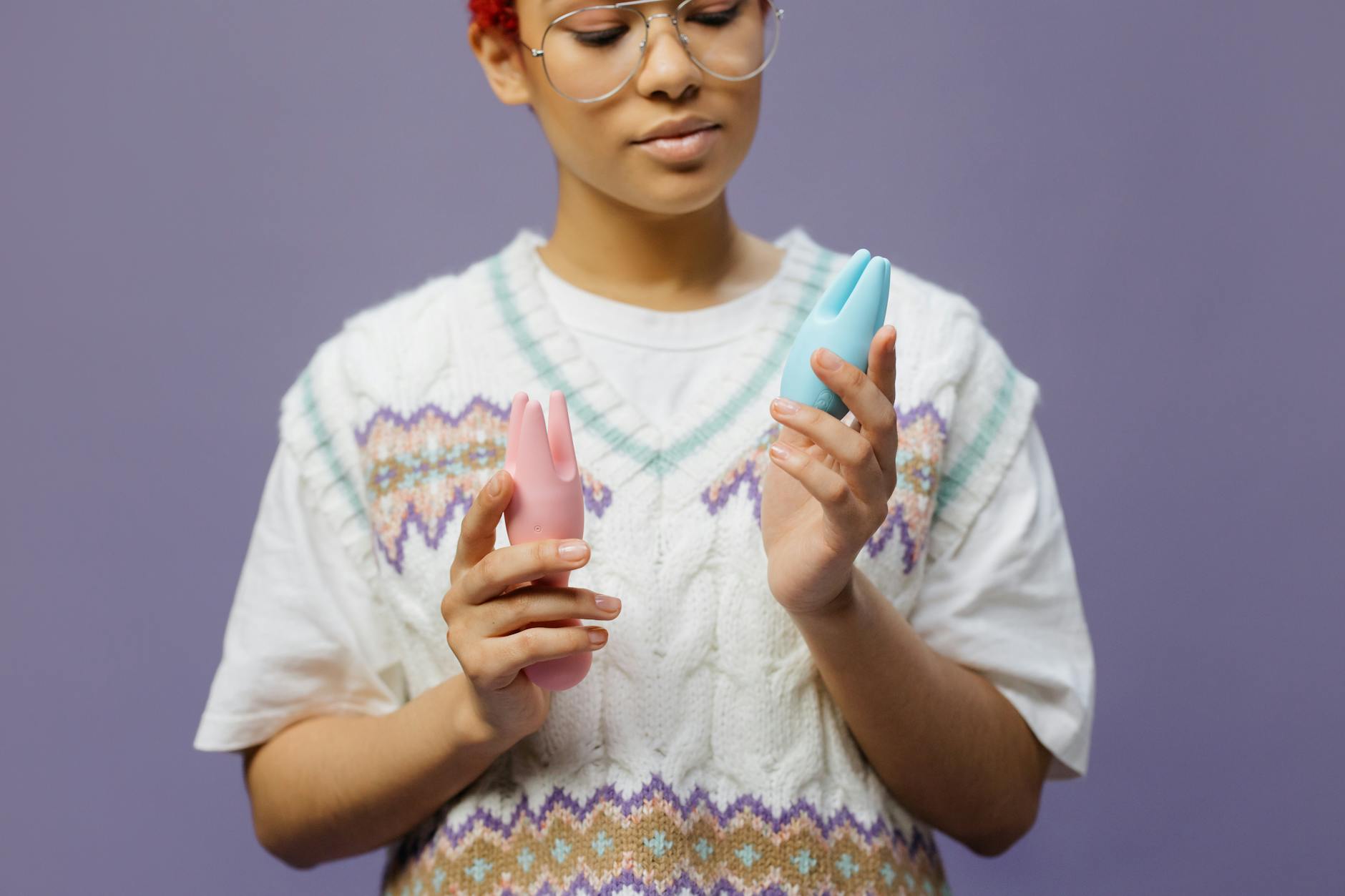
Let's start with what you've probably noticed
Some days your lemon vibrator feels perfect. Other days, the same intensity that worked last week feels almost too much. You're not losing your mind. Your body is cycling through different hormonal states, and clitoral sensitivity shifts with it.
This is why someone might reach for their lem vibrator on day 14 of their cycle and think, "Wait, did this always feel this strong?" The device didn't change. You did.
How your cycle affects clitoral sensation
Ovulation happens roughly mid-cycle, triggered by a surge in luteinizing hormone (LH). Around this window, estrogen peaks, blood flow to the pelvic region increases, and nerve sensitivity in the clitoris actually amplifies. Your tissues are more engorged, more responsive, more alive.
This isn't subtle. Studies on clitoral sensitivity across the menstrual cycle show measurable differences. During the follicular phase (before ovulation), touch sensation in the clitoris can be 20 to 30 percent more responsive than during the luteal phase (after ovulation). That's not something you're imagining.
The mechanism is straightforward: estrogen directly affects nerve receptor density and blood flow. Higher estrogen means faster arousal, faster orgasm, and a lower threshold for sensation to feel intense. A suction vibrator like the Lem, which works through rhythmic pressure changes, becomes even more potent because your tissues are already primed.
Why this matters for your device choices
If you're using a lemon clitoral vibrator, you might find yourself turning down the intensity mid-cycle. That's not a sign something's wrong. It's actually smart adaptation.
For lemon sexual toys with suction technology, the pre-ovulation phase can feel almost overwhelming on higher settings because suction works by creating tissue engorgement, which is already happening naturally due to hormonal shifts. Layer the device on top of that, and it can cross from pleasurable into uncomfortable quickly.
The solution isn't to ignore your cycle. It's to use it.
How to use a lemon vibrator across your cycle
Follicular phase (days 1-14, roughly): Your baseline sensitivity is lower, but it's rising as estrogen climbs. Days 1-7, you might prefer lower vibration patterns or longer warm-up times. By day 10-13, you can experiment with higher intensity. This is when trying new patterns or speeds works best because your body is building arousal gradually.
Ovulation window (days 13-15, roughly): This is when lemon vibrators, especially suction toys like the Lem, tend to feel strongest. Use lower pattern numbers (1-3 instead of 4-6). Take more time between patterns to notice sensation changes. Stop more frequently. The goal isn't to rush to orgasm. The intensity is already there.
Luteal phase (days 16-28, roughly): After ovulation, progesterone rises and clitoral sensitivity drops back down. You might need higher settings or longer stimulation to reach the same level of pleasure. This is also when some people experience stronger, more full-body orgasms, even if clitoral sensation feels less acute. Don't assume something's wrong. Different isn't worse.
The pleasure paradox: sensitivity versus intensity
Here's something nobody tells you: peak clitoral sensitivity doesn't always mean peak pleasure. Mid-cycle, you might feel everything faster and more sharply. That's exquisite. But the deeper, more expansive orgasms often come during the luteal phase, when progesterone is high and sensation feels less pointed.
If you're only using your lemon sexual toys during your most sensitive window, you're missing out. The luteal phase orgasms require different pacing. They need more buildup, more patience, sometimes more varied stimulation. But they can be longer and more intense overall.
What happens with hormonal birth control
If you're on hormonal contraceptives, this entire cycle flattens. Your estrogen doesn't peak. Your progesterone doesn't build and drop. Your clitoral sensitivity stays relatively constant across the month, which is actually why some people notice their lemon vibrator feels "the same every time."
That consistency is useful. But it also means you're missing the natural variation that can make pleasure more interesting. Some people find that after stopping hormonal birth control, their sensitivity to clitoral vibrators shifts noticeably. That adjustment period is real and worth understanding.
Tracking your own cycle and sensation
The most useful thing I suggest is simple observation. For one cycle, note down:
- What day you are in your cycle
- What pattern and intensity level felt best
- How long arousal took to build
- How the orgasm felt (sharp and quick, or deep and rolling)
After two or three cycles, patterns emerge. You'll know by day 12 that you need to dial down the Lem. You'll recognize day 20 as "slower ramp-up day." You'll stop fighting your body and start working with it.
This isn't obsessive tracking. It's the same energy as knowing your coffee order changes with your mood. It's self-knowledge.
The overlooked piece: mental arousal shifts with your cycle too
Physical sensitivity isn't the only thing cycling. Your mental state, motivation, and what turns you on can shift too. Around ovulation, many people report feeling more sexually confident, more interested in partnered sex, more willing to try new things. During the luteal phase, solo pleasure or more familiar patterns often feel more satisfying.
If you're not in the mood to explore on day 20, that's not laziness. That's your body telling you something. Honor it.
When using a lemon clitoral vibrator or other adult toys, sync not just your technique to your cycle, but also your expectations. Some days the point is exploration and intensity. Other days it's comfort and depth. Your lemon sucker will work beautifully either way.
The practical setup for cycle-synced pleasure
If you're someone who loves data and structure, here's a simplified framework:
Days 1-7: Warm-up focused. Longer sessions, lower intensity. Think 10-15 minutes before even turning on your device.
Days 8-14: Experimentation phase. Try new patterns, higher settings, different durations. Your body is primed for novelty.
Days 15-21: Peak sensitivity window (ovulation through early luteal). Lower device intensity, shorter sessions, more frequent breaks. You're working with amplified sensation.
Days 22-28: Deeper arousal phase. Higher device intensity, longer buildup, focus on what feels sustaining rather than sharp.
Not everyone's cycle is 28 days. Adjust the numbers to your reality. The principle stays the same.
When to ignore the cycle
This framework is useful until it becomes rigid. If you're in the middle of your luteal phase and you suddenly want to try maximum intensity on your Lem vibrator, go for it. Your cycle is a guide, not a rule. Pleasure is personal. The science explains what's happening, but it doesn't prescribe what you "should" do.
The goal is awareness, not orthodoxy. When you understand why your body feels different mid-cycle, you stop thinking something's broken. You adjust. You experiment. You discover that your cycle isn't a limitation on pleasure. It's a variation on it.
Common questions about cycles and toys
Does ovulation mean I'll always want my lemon vibrator?
Not necessarily. Some people find mid-cycle arousal is higher, but they don't always want to act on it. Hormones increase capacity for arousal, not obligation. You still get to choose.
Why does my clitoral vibrator feel numb during my period?
During menstruation, blood is redirected toward the uterus. Clitoral tissue is less engorged, and sensitivity temporarily drops. This is temporary and normal. Water-based lubrication helps. So does a longer warm-up.
Can I still use my Lem vibrator if I have an irregular cycle?
Absolutely. Irregular cycles mean you can't predict sensitivity by day count, but you can still notice it in the moment. Listen to your body. If something feels intense, pause and dial down. That's the real skill.
Does stress really flatten my cycle's effect on sensation?
Yes. Chronic stress suppresses estrogen and can delay or skip ovulation entirely. When that happens, the sensitivity peaks become less dramatic. Your cycle might feel "flatter." This is why stress reduction actually matters for pleasure.
What if I want the same sensation every time?
That's why some people prefer hormonal birth control, or why they learn to adjust their device settings throughout their cycle. There's no "right" answer. Both approaches are valid.
Is peak ovulation sensitivity the "best" time for pleasure?
No. It's different. Some people prefer the sharp, fast intensity of mid-cycle. Others love the deeper, longer orgasms of the luteal phase. Best is whatever feels best to you.
The bigger picture
Your cycle isn't something to push through. It's information. When you use lemon vibrators or any clitoral toy, you're working with a body that changes. That change isn't a bug. It's a feature. Tuning into it, tracking what works when, and adjusting your approach accordingly means better pleasure, less frustration, and a deeper sense of ownership over your body.
Your lem vibrator will feel different on day 14 than day 24. Now you know why. And more importantly, you know what to do about it.